
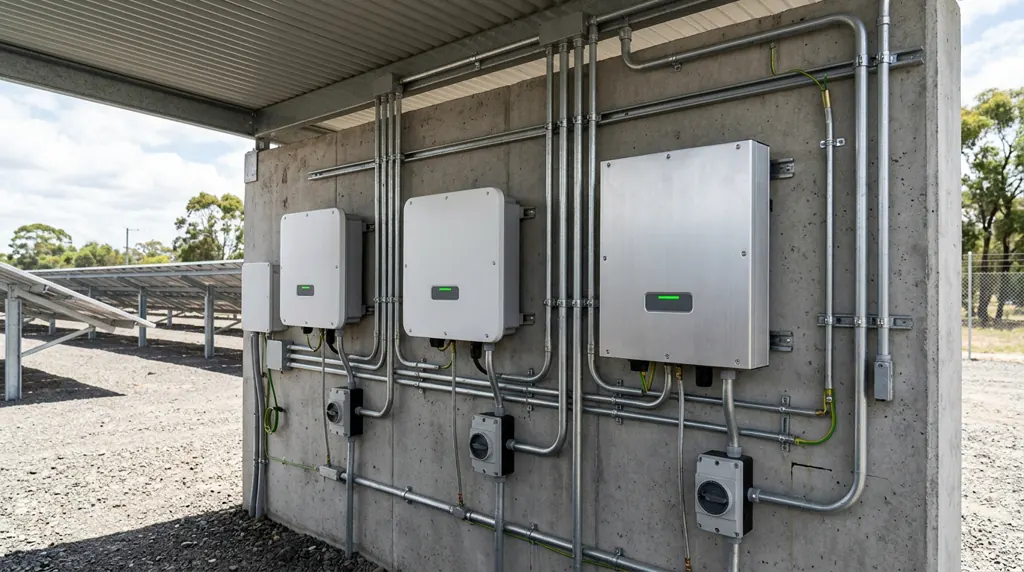
The inverter is the brain of a solar system. It converts the panels’ DC power into AC, tracks the maximum power point (MPPT) and handles grid safety.
Main types
- String inverter: one unit serves a string of panels. Low cost and proven, but shade on one panel can drag down the whole string.
- Microinverter or optimizer: each panel works on its own, so shade and mixed roof angles cost less. Monitoring is per panel, but the price is higher.
- Hybrid inverter: adds battery charging and backup output. Pick it if you plan storage now or later.
Specs that matter
- Size: the DC array is usually 1.0 to 1.3 times the inverter AC rating.
- MPPT inputs and voltage range: must match your string layout.
- Efficiency: look for a peak above 97%.
- Warranty: 5 to 10 years is common, and inverters typically need replacing once during a panel’s life.
- Protection and certification: IP65 or better for outdoor use, plus approval accepted by your utility.
Tip
Buy a reputable brand with local service support. Cheap inverters often fail first and cost more to repair than they saved.