
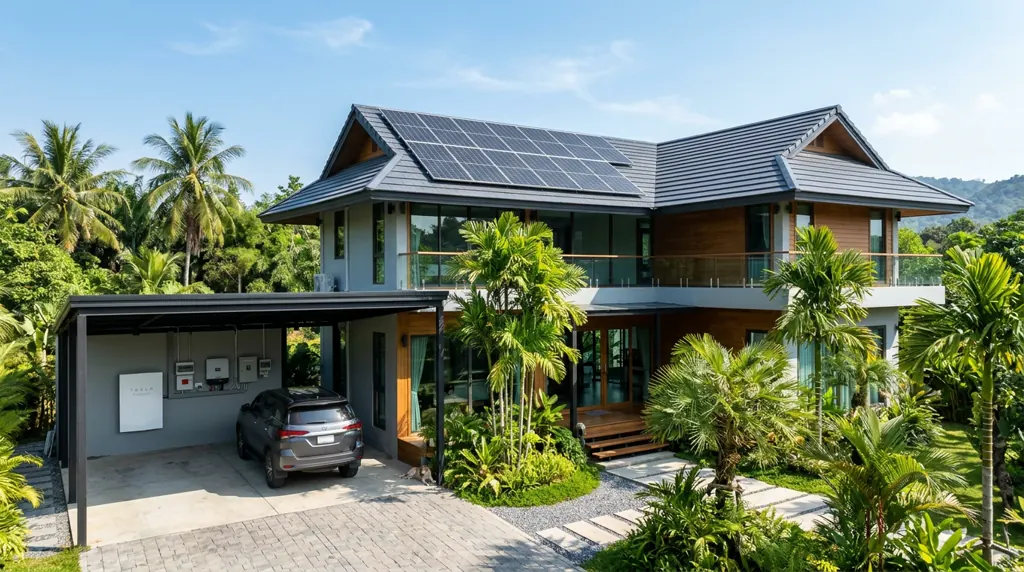
The three system types differ in how they connect to the utility grid and whether they store energy.
On-grid (grid-tied)
Panels feed a grid-tie inverter. You use solar power first and import the rest from the grid. It is the cheapest and simplest option because it needs no battery. It shuts down during a blackout for safety, so it gives no backup power.
Off-grid
The system is not connected to the utility. Panels, a charge controller, a battery bank and an inverter must cover every load, including at night and in bad weather. It suits remote sites, but the battery and a generator for backup add a lot of cost, and sizing must be conservative.
Hybrid
A hybrid inverter combines solar, a battery and the grid. Solar charges the battery by day, and the battery covers the evening or a blackout. It costs more than on-grid but gives backup and lets you shift energy to peak-price hours.
Quick guide
- Reliable grid, want lowest cost: on-grid.
- Frequent outages or time-of-use tariffs: hybrid.
- No grid access: off-grid.
In Thailand, a grid-connected system needs approval from the utility (PEA or MEA), so confirm the rules for your connection type before you buy.