
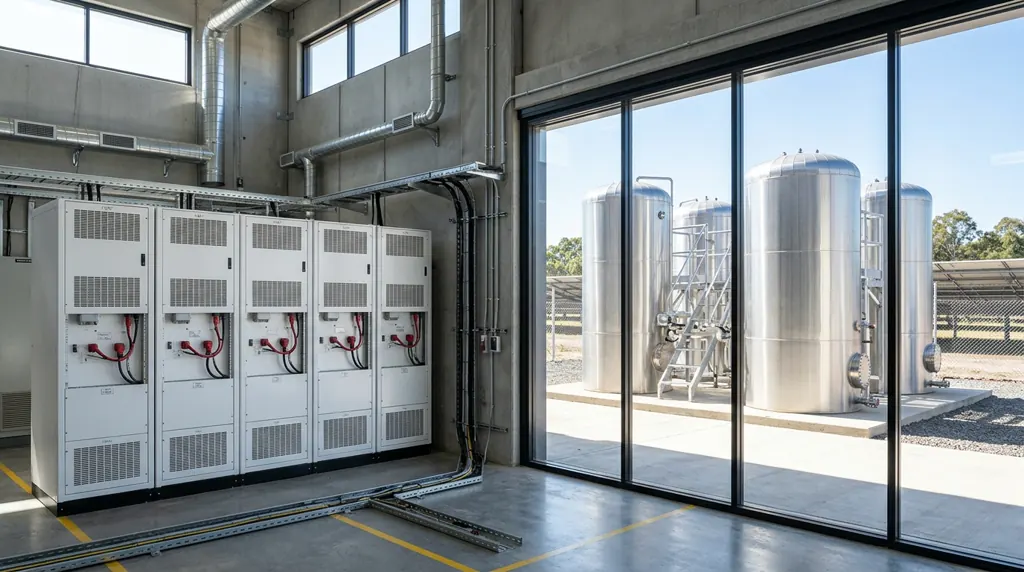
Solar makes power only when the sun shines. Storage moves that energy to the evening and night.
Battery storage
- Lithium iron phosphate (LFP) is the common choice. It is safe, lasts 6,000 or more cycles and tolerates deep discharge.
- Lead-acid costs less upfront but lasts fewer cycles and should not be discharged deeply.
- Key specs: usable capacity (kWh), power rating (kW), round-trip efficiency (about 90% for LFP) and warranty (often 10 years).
Thermal storage
CSP and MicroCSP plants store heat in molten salt or oil, then make steam when needed. This is cheaper per kWh at utility scale and can run a turbine for hours after dark.
Sizing storage
- Find your evening and overnight use in kWh.
- Decide what to back up: the whole home or only critical loads.
- Add 10 to 20% for losses and battery ageing.
Is it worth it?
Storage pays off where evening power is expensive, outages are frequent or export is limited. Where the grid is cheap and reliable, on-grid without a battery usually has the best return.