
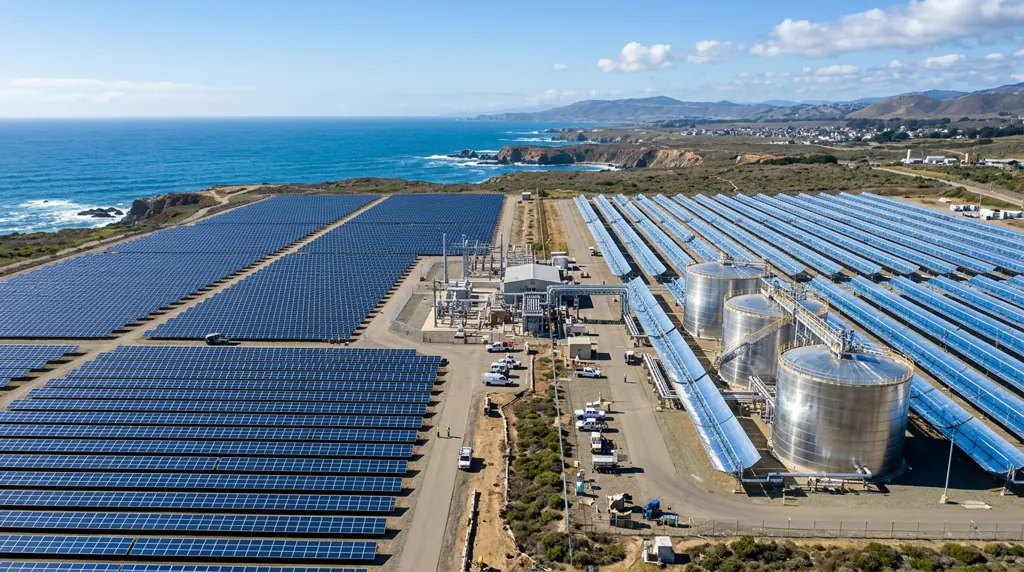
Photovoltaic (PV) panels convert sunlight straight into electricity. Concentrating Solar Power (CSP) uses mirrors to focus sunlight onto a fluid, makes heat, and then drives a turbine. MicroCSP is a smaller, modular form of CSP that uses parabolic trough mirrors close to the ground.
Side by side
- Output: PV makes DC power that an inverter converts. CSP makes steam or hot fluid that drives a generator.
- Light used: PV works with direct and diffuse light. CSP needs strong direct sunlight, so it suits clear, sunny regions.
- Storage: PV needs batteries. CSP can store heat in molten salt or oil and produce power after sunset, often at a lower cost per kWh stored.
- Scale: PV works from a few kilowatts to gigawatts. CSP is mostly utility scale, while MicroCSP aims at the 1 to 10 MW range.
- Maintenance: PV has no moving parts. CSP has mirrors, pumps and turbines to maintain.
Why MicroCSP matters
Keahole Solar Power developed MicroCSP projects in Hawaii because island grids value dispatchable power. Heat storage lets a plant supply electricity into the evening peak instead of only at midday.
Which should you choose?
For homes and businesses, PV is almost always the practical choice. CSP and MicroCSP make sense for utility projects with strong direct sunlight and a need for stored, dispatchable energy.