
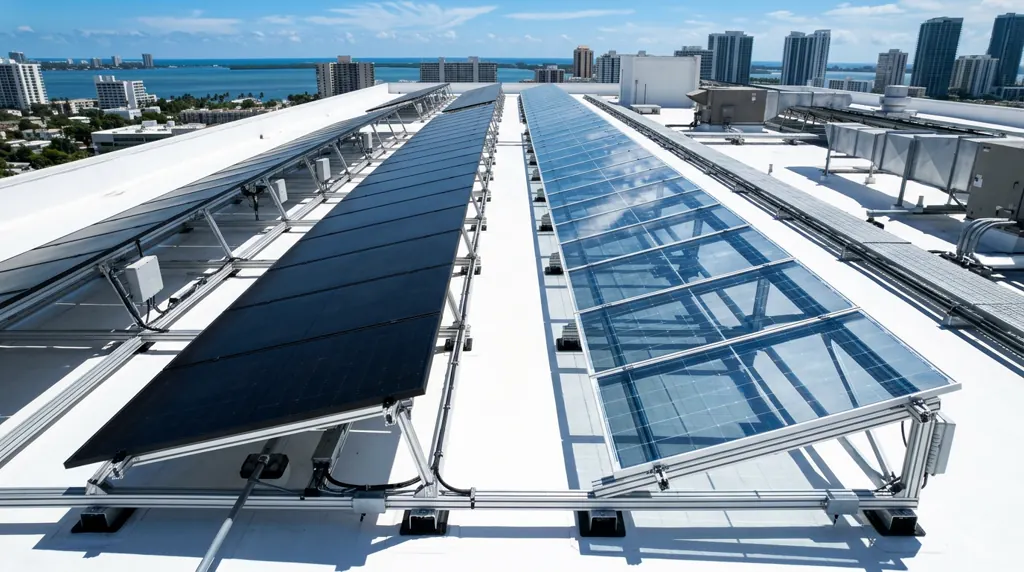
Most panels sold today use crystalline silicon, but the cell design inside differs. Efficiency figures below are typical best-in-class commercial cell values reported in industry press in 2026.
Main technologies
- PERC is the older mainstream design. It is inexpensive and proven, but it is being replaced.
- TOPCon adds a thin tunnel oxide layer that cuts recombination. Cells reach about 24.1% and it is now the volume leader.
- HJT (heterojunction) layers amorphous silicon over crystalline silicon. Cells reach about 23.8%, with a lower temperature loss and good performance in heat.
- Back contact (BC) moves all metal contacts to the rear, so the front absorbs more light. Cells reach about 25% and look cleaner on a roof, usually at a higher price.
- Thin film (CdTe, CIGS) uses very thin layers. Efficiency is lower per square metre, but it can do well in hot climates and on large ground-mount sites.
Mono vs poly
Monocrystalline cells have almost entirely replaced polycrystalline because they are more efficient at similar cost.
How to choose
- Limited roof space: choose BC or HJT for the most watts per square metre.
- Lowest cost per watt: TOPCon is usually the best value.
- Hot climate: look at the temperature coefficient, where HJT and TOPCon usually beat PERC.
- Always compare warranty (25 to 30 years) and the first-year and yearly degradation rate.